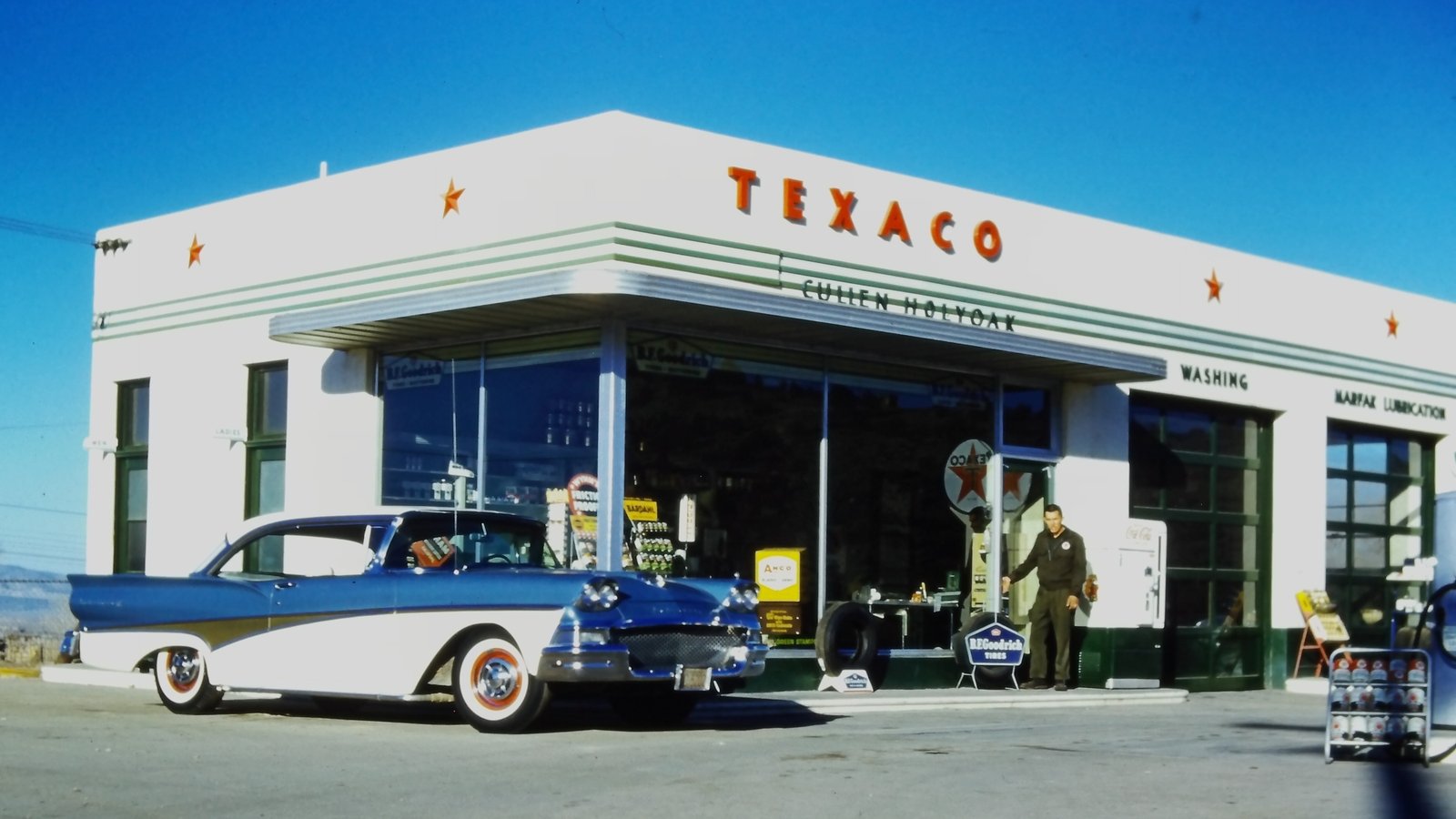
The humble service station that once lined Cedar City’s North Main Street in 1959 has long been a symbol of mid‑century American automotive culture. Owned and operated by Cullen Holyoak, who was born in 1938 and had already opened his own station by the age of 21, the shop served the local community for decades before closing its doors to the gasoline trade. Today, the building houses A‑1 Glass, but photographs from the 1950s and 1960s still capture its original charm.
Holyoak’s family history stretches back even further. Three years ago, the family celebrated the 100‑year anniversary of a different station founded by his great‑grandfather Hansen in northern Utah. Hansen ran that station for over 40 years, a testament to the enduring appeal of small, family‑owned service stations in an era when roadside assistance and community hospitality were paramount.
What Stands Out
The station’s most iconic image is a 1958 Ford Fairlane two‑door parked in front of the shop. The Fairlane, noted for its sweeping side trim and the “Thunderbird Magic” tagline, was often advertised alongside the Thunderbird, promising effortless highway cruising, smooth city traffic handling, and easy hill climbing thanks to its Cruise‑O‑Matic drive.
- 1958 Ford Fairlane – sweeping side trim, “Thunderbird Magic” marketing
- 1956 Ford F100 – likely the shop’s service truck
- Jeep Grand Wagoneer – featured in later shop photos
Beyond the vehicles, the station’s reputation rested on Holyoak’s generosity. He was known to pick up hitchhikers, feed the homeless, and rescue travelers stranded on the road, embodying the community spirit that defined roadside service in the mid‑20th century.
Pricing, Specs & Practical Impact
While the station’s fuel prices and specific service offerings are not documented in the available records, its role as a reliable stop for motorists is clear. The display of the Fairlane and F100 underscored the station’s connection to contemporary automotive trends, offering customers a glimpse of the latest styling and technology. The shop’s presence provided essential services—fuel, basic maintenance, and a safe haven for travelers—contributing to the local economy and the broader network of roadside assistance that was vital before the advent of nationwide chain service stations.
Buyer & Industry Outlook
Family‑owned stations like Holyoak’s have largely disappeared, supplanted by large convenience‑store chains and automated fueling systems. Yet the story of this particular station highlights the importance of preserving automotive heritage sites. The building’s conversion to A‑1 Glass preserves the architectural footprint, while the family’s archival photos offer a visual record of a bygone era of personal service and community care. For automotive enthusiasts and historians, such sites provide tangible links to the past and remind us of how roadside culture shaped the United States’ transportation landscape.