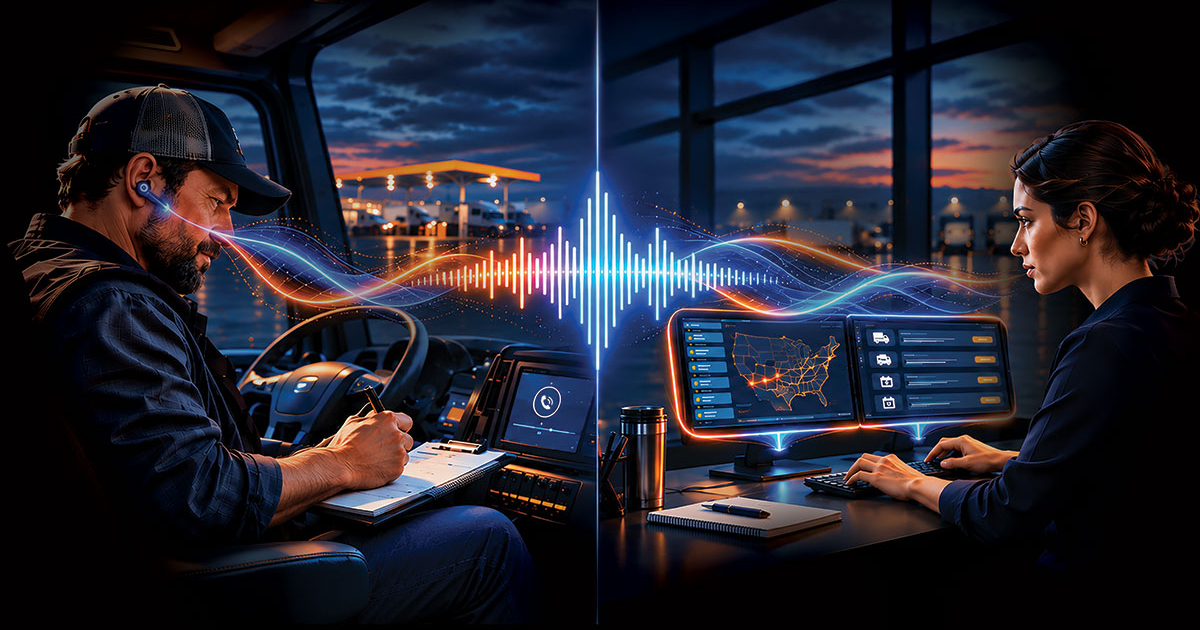
In the logistics world, the quiet revolution of artificial‑intelligence voice agents is reshaping how freight managers handle routine interactions. Companies are deploying these agents to answer driver check calls, issue load updates, and schedule appointments, freeing human staff for more complex, judgment‑based tasks. The result is a measurable reduction in labor hours and a smoother flow of information across transportation management systems.
Described as a “fully conversational” tool, the voice agents are now embedded directly into the software that runs day‑to‑day operations. When a call is made, the agent pulls up the relevant load and carrier data, logs the outcome, and, if necessary, updates the TMS or sends a text or e‑mail. The technology is already in use by major carriers, including P & S Transportation, a subsidiary of PS Logistics, and is being championed by vendors such as Hyperscale Systems, Samsara, and Descartes.
Reported Details
According to a recent report by Descartes, its OpsForce agents processed 3.49 million calls on more than 1.2 million loads in a single year, saving roughly 33,600 labor hours. The company emphasizes that the value of a voice agent lies in its ability to tie conversations to automated outcomes—updating the system, triggering next steps, and flagging exceptions—rather than simply handling the call. Samsara’s October data indicate that AI voice is becoming “the primary interface for frontline work,” with fleets using the technology for reporting, compliance risk prediction, and driver communication.
McLeod Software’s chief AI officer, Mario Moore, notes that routine, rote calls are the best fit for voice agents because they are predictable and produce structured data. He adds that the real benefit emerges when the conversation is connected to the operational system, turning a simple call into an automated action. Paul Rosa of Penske Truck Leasing highlighted the importance of these tools as the industry prepares for the EPA’s tougher 2027 NOx standard, which will increase the need for accurate, real‑time data.
Key Highlights
- Descartes OpsForce handled 3.49 million calls on 1.2 million+ loads, saving 33,600 labor hours in one year.
- Voice agents are best suited to high‑volume, low‑leverage tasks such as check calls, status updates, and maintenance follow‑ups.
- Hyperscale’s Vic pulls load data before a call, logs outcomes, and updates TMS automatically.
- Samsara reports AI voice becoming the primary interface for frontline work in fleet operations.
- Agents can trigger automated workflows, send texts or e‑mails, and prevent delays when drivers are ready to leave maintenance.
- Complex or judgment‑based interactions remain routed to human staff.
Status & Next Steps
The trend toward automation is already delivering tangible efficiency gains, but the technology is still evolving. Developers are refining the integration between voice agents and TMS platforms to ensure that conversations translate into meaningful system updates. As fleets prepare for stricter emissions regulations, the demand for accurate, real‑time data will grow, positioning AI voice agents as a critical component of compliance strategy. In the coming months, we expect to see broader adoption across carrier types, deeper integration with predictive analytics, and continued focus on preserving the human touch for high‑stakes decision making.